- Other Worlds
- Posts
- The Galactic Codex Explained
The Galactic Codex Explained
Across channeled texts and ancient scripture alike runs a single startling idea: that the universe is governed not only by physics, but by law. What are we to make of the so-called Galactic Codex?
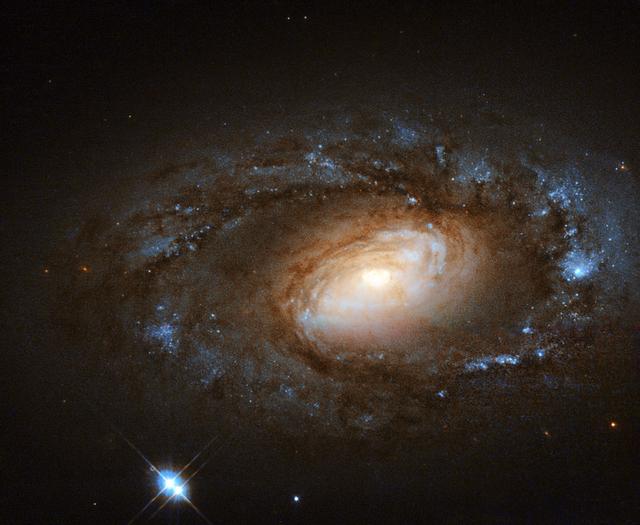
Image: NASA (GSFC) — public domain
A Law Written in Starlight
Imagine, for a moment, that the cosmos is not a lawless void. Imagine that beneath the indifferent machinery of gravity and radiation there runs another kind of order entirely — a constitution of sorts, a body of moral principles said to bind every conscious being from the smallest asteroid colony to the oldest galactic civilization. This is the claim at the heart of what its adherents call the Galactic Codex.
It is one of the stranger artifacts of modern esoteric thought: a document no one has ever held, from an institution no one has ever photographed, describing laws that have never appeared in any courtroom on Earth. And yet the idea refuses to fade. It circulates through spiritual communities, meditation groups, and the sprawling archives of the internet, invoked with the solemnity of scripture. To understand why, we have to separate what is documented, what is disputed, and what is pure speculation — and then ask why the human mind keeps reaching for the notion of a law that spans the stars.
What Is the Galactic Codex?
The Galactic Codex is described by those who promote it as the fundamental moral and spiritual law governing all sentient life in the galaxy. It is not presented as an invention but as a discovery — an eternal set of principles said to be recognized by advanced extraterrestrial societies long before humanity learned to knap flint.

Image: NASA (GSFC) — public domain
In its most widely circulated form, the Codex is framed around a few core ideas: that every being possesses an inviolable right to freedom and self-determination; that no entity may be enslaved or spiritually dominated by another; and that the universe tends, over vast timescales, toward balance, liberation, and the dissolution of suffering. It reads less like a legal statute and more like a cross between a bill of rights and a spiritual creed — a kind of cosmic Magna Carta.
It is important to state plainly at the outset: there is no scientific evidence that the Galactic Codex exists as a literal document, nor any verified contact with the civilizations said to uphold it. What we are examining is a modern belief system — and belief systems, whatever their truth value, are themselves worth understanding.
The Modern Origins of a Cosmic Law
The specific text most people mean when they say "Galactic Codex" emerged from the contemporary channeling and conspiracy-spiritual milieu of the late twentieth and early twenty-first centuries. It was popularized in particular by writers within the so-called "Prepare for Change" and "Cobra" communities beginning around 2012, who presented the Codex as a transcribed cosmic law underpinning a coming planetary liberation.
Its intellectual lineage, however, runs deeper. The Codex borrows heavily from mid-twentieth-century contactee literature — the wave of accounts, beginning in the 1950s with figures like George Adamski, that described benevolent "Space Brothers" bearing messages of peace and higher law. It echoes the Theosophical writings of Helena Blavatsky and later Alice Bailey, who spoke of hierarchies of ascended beings overseeing human evolution. And it shares DNA with the broader New Age synthesis that braided together Eastern metaphysics, quantum vocabulary, and Cold War anxieties about humanity's survival.
In other words, the Galactic Codex did not arrive from the sky. It assembled itself, piece by piece, out of a century of spiritual longing — much the way the Black Knight Satellite legend assembled itself out of unrelated historical fragments. That genealogy does not, by itself, prove the idea false. But it does tell us that the Codex is a human document, shaped by human hopes, whatever else it may claim to be.
The Articles of the Codex
What does the Codex actually say? Accounts vary, but a recognizable structure recurs across the most widely shared versions. It is usually organized into several "laws," each unfolding into subsidiary principles.
- The Law of Sovereignty. Every sentient being has an inalienable right to live in freedom and to determine its own destiny, free from coercion or domination.
- The Law of Love and Harmony. All beings are encouraged toward cooperation, compassion, and the resolution of conflict — not as sentiment, but as the natural state toward which conscious life gravitates.
- The Law of Balance. Where harmony is violated, the Codex permits intervention to restore it — a clause that, in the mythology, justifies the actions of benevolent galactic forces against tyranny.
- The Law of Clarified Intervention. Advanced beings may act to liberate those who are oppressed, but only within careful ethical limits, so that liberation does not itself become a new domination.
What is striking is how familiar these ideas sound. Strip away the cosmic framing and you are left with something very close to Enlightenment political philosophy — the self-evident rights of the American Declaration of Independence, the fraternity of the French Revolution, the nonviolence of twentieth-century liberation movements. The Codex projects humanity's own hard-won ideals onto a galactic screen and returns them to us as ancient, universal, and authoritative.
Ancient Echoes: Cosmic Law Before the Codex
Here the story becomes genuinely interesting, because the impulse behind the Galactic Codex is anything but new. Long before anyone spoke of extraterrestrials, human cultures insisted that the universe was ordered by a moral law woven into its very structure.

Image: "Colossi of Memnon, Luxor, Egypt" by Ray in Manila (CC BY 2.0) via Openverse
In ancient Egypt, that principle was Ma'at — truth, balance, and cosmic order, personified as a goddess whose feather weighed the hearts of the dead. To live in accordance with Ma'at was to align oneself with the deep order of the cosmos itself. In Vedic India, the parallel concept was Ṛta, the principle of natural and moral order that later flowered into the idea of dharma. The Chinese spoke of the Tao, the Way that underlies and harmonizes all things. The Stoics of Greece and Rome described a logos, a rational law pervading the universe, to which the wise person seeks to conform.
Each of these traditions insisted, in its own vocabulary, that ethics is not merely a human convention but a feature of reality — that the stars and the conscience obey, at some level, the same grammar. The Galactic Codex is, in this light, the most recent member of a very old family. It simply swaps temples and philosophers for starships and galactic councils.
The Skeptic's Ledger
Intellectual honesty requires that we set the ledger straight. From the standpoint of mainstream science, the Galactic Codex has no evidentiary standing whatsoever. We have found no confirmed signals from any extraterrestrial intelligence, despite more than six decades of searching since Frank Drake's Project Ozma pointed a radio telescope at nearby stars in 1960. We have no verified physical artifacts, no reproducible contact, no document that can be examined by independent researchers.
The Codex's claims are, by their nature, unfalsifiable — a quality that makes them spiritually appealing but scientifically inert. Channeled texts cannot be tested; galactic councils cannot be subpoenaed. And the specific modern versions of the Codex are frequently bound up with elaborate conspiracy narratives involving hidden wars, secret liberations, and imminent planetary transformations whose predicted dates have repeatedly passed without event.
A careful observer will also notice the Codex's suspiciously terrestrial character. A truly alien moral code — forged by minds with different biology, different histories, perhaps different relationships to time and death — might be unrecognizable to us, even disturbing. The Codex, by contrast, reflects our values back with flattering precision. That is a clue not to its cosmic origin but to its human authorship.
Why the Idea Endures
And yet dismissing the Galactic Codex as mere fiction misses something important about why people reach for it. Beneath the mythology lies a profound and perennial question: Is the universe morally indifferent, or is there some sense in which justice is built into the fabric of things?
Modern cosmology hands us a sky of staggering grandeur and apparent silence. The physics is magnificent; the meaning is left to us. For many, that silence is unbearable — and the Galactic Codex answers it with the promise that we are not alone, that someone is watching, that oppression is not the final word, and that the long arc of cosmic history bends toward freedom. It is, in essence, a theology for a secular and scientific age, dressed in the imagery of the space era.
The Codex endures for the same reason the Tree of Life endures across cultures, and for the same reason Ma'at and the Tao never truly died. It expresses a conviction older than any religion: that the cosmos is not merely a place but an order, and that to be conscious is to be accountable to something larger than oneself.
The Mirror in the Sky
So what, in the end, is the Galactic Codex? The documented answer is clear enough: it is a modern spiritual text, assembled over the last century from contactee lore, Theosophical metaphysics, and Enlightenment ideals, with no scientific evidence to support its literal claims. To treat it as proven galactic law would be to mistake hope for fact.

Image: NASA (JSC) — public domain
But there is a second answer, and it is not so easily dismissed. The Codex is a mirror. In imagining the laws that might govern a wiser, older, star-faring civilization, we are really describing the civilization we wish to become. Its articles of sovereignty, harmony, and balance are not reports from the heavens — they are aspirations written in the sky because they are too large to fit anywhere else.
Perhaps the deepest question the Galactic Codex raises is not whether some distant council enforces a cosmic law. Perhaps it is this: if such a law existed — a standard of freedom and compassion binding on all conscious beings — would humanity, right now, be found in compliance with it? The stars may keep their silence on the matter. But the question is ours to answer, and the answering cannot wait for first contact.
“The arc of the moral universe is long, but it bends toward justice.” — Martin Luther King Jr.
Until next time,
«€eez∆eR»